What House Is Harry Potter In? Gryffindor Explained
June 8, 2026 | By Felix Pemberton
Harry Potter is in Gryffindor at Hogwarts. That short answer is easy to remember, but it also opens a better question: why does Gryffindor fit him so well when his story includes ambition, rule-breaking, loyalty, curiosity, and even a few clues that seem to point somewhere else? If you are comparing Harry's sorting with your own magical identity, a fan-made Harry Potter house quiz can be a fun way to notice which house traits feel familiar without treating the result as official canon or a serious personality label.
Harry's house matters because Gryffindor is not simply "the hero house." It is a house built around courage, nerve, daring, and the willingness to act when the safest choice would be silence. Harry is not fearless, flawless, or always sensible. He belongs in Gryffindor because his defining moments show what he values when fear, pressure, and temptation are all in the room.
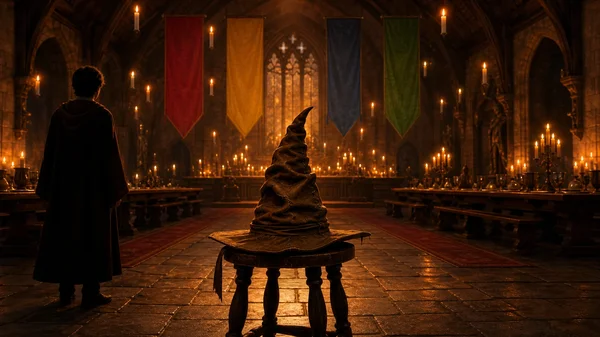
The Short Answer: Harry Potter Is in Gryffindor
Harry Potter is sorted into Gryffindor in his first year at Hogwarts. In practical search terms, that answers several versions of the same question: what house is Harry Potter in, in what house is Harry Potter, and what Hogwarts house is Harry Potter in? The answer is Gryffindor.
Gryffindor is associated with courage, nerve, daring, chivalry, and a readiness to face danger. Those traits show up early in Harry's story. He stands up for friends, challenges cruelty, and moves toward risk when someone vulnerable needs help. He does not always stop to make the neatest plan, which is part of the point. Gryffindor courage often looks impulsive because it begins with conviction before it becomes strategy.
It is also worth separating Harry's house from the idea of a perfect personality type. A Hogwarts house is a storytelling category, not a full map of a person. Harry can be brave and angry, loyal and reckless, compassionate and stubborn. Gryffindor explains his strongest pattern, not every choice he makes.
Why Gryffindor Fits Harry Better Than a Single Brave Moment
Harry's sorting is not based on one heroic scene. It makes sense because his behavior repeats the same value pattern across the series. He dislikes being controlled, but he is not driven mainly by status. He breaks rules, but usually because he believes someone is in danger or the official answer is failing. He is competitive, but his deepest loyalty is to people, not prizes.
For readers comparing those values with themselves, the site's free Hogwarts sorting quiz can turn the same traits into an easy reflection exercise. The useful question is not "Which house sounds coolest?" but "Which values do I keep choosing when things get uncomfortable?"
He Acts Before Comfort Catches Up
Gryffindor bravery is not the absence of fear. Harry is afraid many times. He worries, doubts himself, and sometimes misunderstands what is happening. What makes him Gryffindor is that he tends to move anyway. When a friend is threatened, when an adult refuses to listen, or when the truth seems hidden behind danger, Harry is more likely to step forward than wait for the perfect moment.
That trait is why Gryffindor can feel inspiring and frustrating at once. The same instinct that saves people can also create messes. Harry's house does not mean every bold choice is wise. It means courage is often the first language he speaks.
He Chooses People Over Status
One of the clearest reasons Harry belongs in Gryffindor is that he repeatedly values friendship, loyalty, and moral courage over prestige. Slytherin might appeal to someone who wants influence, legacy, or carefully protected power. Harry is not untouched by those things; no character is that simple. But he does not build his identity around them.
He is drawn to Ron's openness, Hermione's fierce intelligence, Hagrid's kindness, and the messy warmth of people who accept him as a person rather than a symbol. Gryffindor fits because Harry's bravery is relational. He fights hardest when someone else is at risk.
He Is Brave, Not Perfectly Fearless
Many fans ask what is the best house in Harry Potter or what house in Harry Potter is the strongest. Harry's story is a reminder that those questions miss something important. Gryffindor is not "best" because Harry is in it. Gryffindor is simply the house where Harry's main strengths and weaknesses become most visible.
His bravery can be generous. It can also become impatience, suspicion, or stubbornness. A good house reading should leave room for both sides. Gryffindor gives Harry a home, not a halo.

Is Harry Actually a Slytherin?
Harry is not actually a Slytherin, but the question is understandable. He has traits and story details that make Slytherin feel close enough to discuss. He can be resourceful, secretive, competitive, and determined. He also has a strange connection to snakes and to Voldemort, which makes the Slytherin question more dramatic than a normal personality comparison.
The important point is that Slytherin is not a synonym for evil. Slytherin values ambition, cunning, leadership, and resourcefulness. Those qualities can be used well or badly. The problem is not that Harry has no Slytherin-like qualities. The problem is that they are not his guiding values.
Harry's sorting turns on choice as much as traits. He does not want to be placed where he fears the wrong kind of future might be waiting for him. More importantly, his later actions keep proving that his strongest instinct is not self-preservation or status-building. It is protective courage. Gryffindor wins because Harry's repeated choices align more with daring and moral nerve than with ambition as a life strategy.
This is also why "Harry Potter what house is Harry in" has a richer answer than a one-word label. Gryffindor is the canon answer, but the Slytherin question helps explain why the label feels earned instead of automatic.
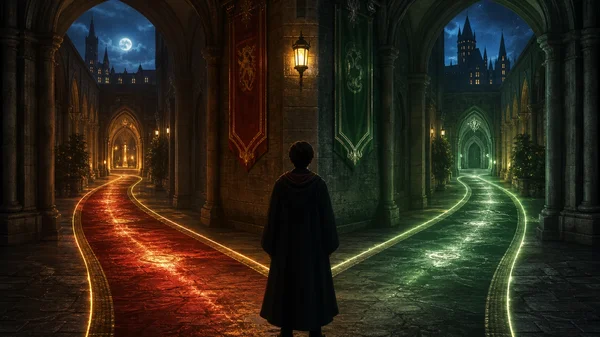
What the 4 Houses in Harry Potter Mean
The four Hogwarts houses represent different clusters of values. They are simple enough to remember, but broad enough that many characters could show traits from more than one house.
| House | Core traits | Quick meaning |
|---|---|---|
| Gryffindor | Courage, nerve, daring, chivalry | The house of bold action and moral bravery |
| Slytherin | Ambition, cunning, leadership, resourcefulness | The house of strategic drive and influence |
| Ravenclaw | Intelligence, learning, wisdom, wit | The house of curiosity, ideas, and creative thinking |
| Hufflepuff | Loyalty, patience, fairness, hard work | The house of steadiness, kindness, and dedication |
If you are asking what house is blue in Harry Potter, the answer is Ravenclaw. Its colors are commonly associated with blue and bronze in the books, though screen adaptations have made some visual details feel different for casual viewers. Ravenclaw traits also explain why fans ask why Hermione is not Ravenclaw. Hermione is brilliant, bookish, and deeply curious, but her defining story choices often show Gryffindor courage: she risks comfort, status, and safety for her friends and principles.
This is the key to reading any house result. A house is not only what you are good at. It is what you tend to choose, protect, or prioritize.
Where Other Key Characters Fit
Character house questions are popular because they help fans triangulate what each house means. Harry is Gryffindor, and so are Hermione Granger and Ron Weasley. Hermione may look like a Ravenclaw at first glance, but her courage and willingness to act under pressure place her beside Harry and Ron.
Cho Chang is Ravenclaw, which fits the blue house question and the common search "what house is Cho in Harry Potter." Luna Lovegood is also Ravenclaw, though she shows a dreamy, open-minded version of the house rather than a purely academic one. Cedric Diggory is Hufflepuff, a useful reminder that Hufflepuff is not a weak or secondary house; Cedric is skilled, fair, and respected.
Dumbledore is associated with Gryffindor, though his story also shows how ambition and intelligence can complicate a person. Hagrid is commonly associated with Gryffindor in fan references, especially because of his loyalty, warmth, and courage. Harry's son Albus Severus Potter is sorted into Slytherin in the stage-play continuation, which helps modern fans separate Slytherin from old stereotypes.
These examples make Harry's sorting clearer. He is not Gryffindor because every admired character must be Gryffindor. He is Gryffindor because courage is the trait that keeps returning when his story is under pressure.
Use Harry's Sorting as a Mirror, Not a Rule
The most useful way to read Harry's Gryffindor identity is as a mirror for your own values. Do you act first when someone needs help? Do you prefer clever planning before any risk? Do you protect harmony and fairness? Do you chase knowledge because the question itself matters? Those answers can point toward Gryffindor, Slytherin, Hufflepuff, or Ravenclaw without turning the result into a rigid label.
If you want a simple, low-pressure way to compare your instincts with the four houses, you can explore a free no-sign-up Harry Potter house quiz. Use it as fandom self-reflection: a playful way to notice your traits, revisit house meanings, and understand why Harry's Gryffindor result feels so central to his story.
Harry Potter is in Gryffindor, but the better lesson is that a house becomes meaningful when it reflects repeated choices. Harry's choices keep returning to courage, friendship, and action under pressure. That is why Gryffindor is not just where he is placed. It is the house that best explains who he keeps deciding to be.

FAQ
Is Harry Potter Hufflepuff or Gryffindor?
Harry Potter is Gryffindor. He shares some traits that Hufflepuff values, such as loyalty and devotion to friends, but his defining pattern is Gryffindor courage. He repeatedly moves toward danger when people need protection, even when he is scared or unsure.
Is Harry Potter actually a Slytherin?
No. Harry has some Slytherin-like traits, including resourcefulness and determination, and his story gives fans reasons to ask the question. Still, his repeated choices align more strongly with Gryffindor's courage, nerve, and protective action than with Slytherin ambition.
Why is Hermione not Ravenclaw?
Hermione has many Ravenclaw qualities: intelligence, study habits, memory, and curiosity. She is Gryffindor because the series defines her by more than knowledge. She repeatedly uses her intelligence in brave, risky, and loyal ways, which makes Gryffindor a better fit for her full character.
What do the 4 houses in Harry Potter mean?
Gryffindor centers on courage and daring. Slytherin centers on ambition and resourcefulness. Ravenclaw centers on intelligence, wisdom, and wit. Hufflepuff centers on loyalty, patience, fairness, and hard work. Most characters show more than one trait, but one cluster usually leads.
What house is blue in Harry Potter?
Ravenclaw is the blue house in Harry Potter. In the books, Ravenclaw is associated with blue and bronze, and the house values intelligence, learning, wisdom, and wit.
How do I know what my house is in Harry Potter?
Start by comparing values, not stereotypes. Notice whether you are most guided by courage, ambition, wisdom, or loyalty when choices become difficult. A quiz can help organize those signals, but the most enjoyable answer usually comes from reflecting on your repeated choices.