What Genre Is Harry Potter? Fantasy, Fiction, and More
June 18, 2026 | By Felix Pemberton
If you are asking "what genre is Harry Potter," the short answer is: Harry Potter is fantasy fiction. More precisely, the books are children's and young adult fantasy novels with strong coming-of-age, school story, mystery, adventure, and dark fantasy elements. That is why one label can feel too small. The series has magical worldbuilding, invented rules, enchanted creatures, prophecies, spells, and a hidden wizarding society, but it also follows students growing up, making friends, solving mysteries, and facing moral choices. For fans who enjoy connecting the genre to Hogwarts identity, a fan-made Hogwarts house quiz can be a light way to reflect on the values that shape the story.
The Short Answer: Harry Potter Is Fantasy Fiction
Harry Potter falls under fantasy because the central story depends on magic. Harry discovers that he is a wizard, attends a school for witchcraft and wizardry, learns spells, encounters magical objects, and enters a society that operates beside the non-magical world. Without magic, the plot would not simply change mood; it would stop being Harry Potter.
It is also fiction, not non-fiction. The characters, school, magical government, spells, and central conflict are invented. The books may reflect real emotions and social themes, but they do so through an imagined story world. A clean genre answer would be:
- Main genre: fantasy fiction
- Audience shelf: children's literature and young adult fiction
- Major subgenres: coming-of-age, school story, mystery, adventure, dark fantasy
- Format: seven novels, adapted into eight main films
That last point explains a common search confusion. People often look for "Harry Potter books in order 1-8" because the film series has eight entries. The core book series has seven novels. The final novel, Harry Potter and the Deathly Hallows, was adapted into two films.
Is Harry Potter Fantasy or Science Fiction?
Harry Potter is fantasy, not science fiction. The difference comes from how the impossible parts of the story are explained.
In science fiction, extraordinary events are usually linked to science, technology, space travel, experiments, future societies, artificial intelligence, or speculative inventions. The story may stretch science far beyond reality, but it often asks "what if this technology existed?"
Harry Potter asks a different question: "what if magic existed beside ordinary life?" Spells, potions, wands, prophecies, ghosts, enchanted portraits, magical creatures, and hidden schools are not presented as advanced technology. They belong to a magical tradition with its own history and rules.
That does not mean the series lacks systems. Hogwarts classes, spell limitations, wand ownership, magical law, and house values all create structure. But those systems are fantasy systems, not scientific ones. A broomstick is not a vehicle explained through engineering; it is an enchanted object. A Pensieve is not a laboratory device; it is a magical object used to view memories.
What Genre Is Harry Potter Book 1?
Harry Potter and the Philosopher's Stone, published in the United States as Harry Potter and the Sorcerer's Stone, is children's fantasy with a school story and mystery plot. It introduces the reader to the hidden magical world through Harry's point of view. The early tone is full of discovery: letters arrive strangely, Diagon Alley reveals magical commerce, Hogwarts becomes a home, and classes make magic feel learnable.
Book 1 is also a classic portal-style fantasy in spirit, even though Harry does not enter a separate world through a single doorway. He moves from an ordinary, restrictive life into a secret magical society that was always there. That shift gives the first book its sense of wonder.
The mystery element matters too. Harry, Ron, and Hermione try to understand what is hidden at Hogwarts, who wants it, and why. That detective rhythm gives the fantasy structure. Readers are not only admiring magic; they are following clues.
What Genre Is Harry Potter Book 4?
Harry Potter and the Goblet of Fire is still fantasy, but it moves the series toward darker young adult fantasy, tournament adventure, political fantasy, and thriller. The Triwizard Tournament gives the book a competition structure, while the return of Voldemort changes the stakes for the rest of the series.
This is why some readers feel the genre "changes" around book 4. The main genre does not change from fantasy to something else. Instead, the balance of subgenres shifts. The early books lean more heavily on school mystery and wonder. Book 4 adds more danger, public spectacle, moral pressure, and a broader view of the wizarding world. The story becomes less about discovering Hogwarts and more about surviving a conflict that reaches far beyond school.
That tonal shift is one reason Harry Potter can sit on more than one shelf in a reader's mind. It begins with a children's fantasy doorway and grows into a darker coming-of-age fantasy saga.
The Main Subgenres Inside the Harry Potter Books
Harry Potter is easiest to understand when you treat fantasy as the main genre and the other labels as layers.
Children's and Young Adult Fantasy
The first books are strongly associated with children's literature because Harry starts as an eleven-year-old, the language is accessible, and the school setting frames the story. As the characters age, the series becomes more intense and more closely associated with young adult fantasy. Friendship, identity, loyalty, grief, ambition, fear, and responsibility become more central with each book.
Coming-of-Age Fiction
Harry grows from a neglected child into someone who must understand his past, choose his values, and carry responsibility. Ron and Hermione also mature through insecurity, courage, loyalty, jealousy, intelligence, and sacrifice. Coming-of-age fiction is about the passage from childhood into a more complicated understanding of the self and the world. Harry Potter fits that pattern across the full series.
British School Story
Hogwarts gives the books a school story structure: houses, classes, teachers, rivalries, exams, sports, friendships, punishments, rules, and annual rhythms. The school is not just scenery. It shapes the way readers understand belonging, identity, competition, and loyalty. Even when the wider conflict grows darker, the house system and school calendar give the series a recognizable frame.
If you enjoy the house layer most, you can explore your Hogwarts house traits as a companion to the literary side of the series.
Mystery and Detective Fiction
Most books contain a central mystery. Who is guarding the stone? What is attacking students? Who opened the Chamber of Secrets? Who put Harry's name in the Goblet of Fire? What is Draco doing? These questions give the books momentum. The clues are placed inside a fantasy world, but the reader's experience often resembles a mystery: notice details, test suspects, revise assumptions, and wait for the reveal.
Adventure and Quest Fantasy
The series also uses adventure and quest patterns. Characters leave safety, face tests, gather knowledge, and confront danger. The later books especially rely on quest structure as Harry, Ron, and Hermione search for objects tied to Voldemort's power. This quest layer connects Harry Potter to older fantasy traditions without making it identical to epic fantasy.
Dark Fantasy and Gothic Elements
Harry Potter includes death, curses, possession, haunted spaces, graveyards, forbidden forests, monsters, and moral corruption. These elements do not make the series horror as its main genre, but they add dark fantasy and gothic flavor. The darkness grows over time, which helps explain why the later books feel older than the early ones.
What Genre Are the Harry Potter Movies?
The Harry Potter movies are fantasy adventure films. Like the books, they also include mystery, coming-of-age drama, school story elements, and darker fantasy as the series progresses.
Film genre can feel slightly different from book genre because movies rely on visual pacing, action sequences, music, and atmosphere. The early films emphasize wonder, castle life, and magical discovery. The middle and later films lean more into suspense, battles, emotional conflict, and darker visuals. Still, the core genre remains fantasy because the story world is built around magic.
If someone asks "what movie genre is Harry Potter," the best answer is fantasy adventure, with family, mystery, and coming-of-age elements depending on the specific film.
How Harry Potter Compares with Similar Series
Searches about Harry Potter often sit beside questions about The Lord of the Rings, The Hunger Games, and Percy Jackson. These comparisons help clarify the label.
The Lord of the Rings is fantasy too, but it is usually described as high fantasy or epic fantasy because it takes place in a fully secondary world with large-scale mythic history, languages, kingdoms, and a world-saving quest.
Percy Jackson is closer to Harry Potter in reader experience because it mixes modern life, young heroes, mythic powers, school or camp identity, humor, and quests. It is fantasy, especially mythological fantasy.
The Hunger Games is usually dystopian young adult fiction with action and science fiction elements. It is speculative, but its core is political control, survival, media spectacle, and rebellion rather than magic.
Harry Potter sits between school fantasy, portal-like discovery, mystery, and coming-of-age adventure. Its genre identity is broad because Hogwarts makes the magical world feel both hidden and familiar.
A Quick Genre Checklist for Harry Potter
Use this checklist when you need a fast answer for school, reading notes, or a book recommendation:
- Does the story depend on magic? Yes, so the main genre is fantasy.
- Is it based on real events? No, so it is fiction.
- Is it mainly science-based speculation? No, so it is not science fiction.
- Does it follow young characters growing up? Yes, so it includes coming-of-age fiction.
- Does school life shape the plot? Yes, so it includes the school story tradition.
- Do clues and secrets drive the books? Often, so mystery is a major layer.
- Does the tone darken over time? Yes, especially from book 4 onward.
This is the most useful answer: Harry Potter is fantasy fiction first, with school story, mystery, adventure, and coming-of-age elements woven through the series.
Why the Genre Matters for Fans
Genre is not just a library label. It shapes what readers expect from the story. When you know Harry Potter is fantasy, you expect magic, wonder, impossible places, and invented rules. When you notice the school story layer, Hogwarts houses become more than decoration. They become a way to organize values, friendship, rivalry, and identity.
That is why Gryffindor, Slytherin, Hufflepuff, and Ravenclaw feel so memorable. Each house turns a set of values into a story identity. Courage, ambition, loyalty, patience, wit, creativity, and wisdom are not only personality words; they are genre tools. They help the fantasy world sort conflict, friendship, choice, and belonging into symbols readers can remember.
Understanding genre can also help you choose what to read next. If you love the school structure, look for magical academy stories. If you love the mystery, choose fantasy with detective plots. If you love the darker later books, try young adult fantasy with political conflict and moral pressure. If you love the house identities, look for stories where groups, factions, or teams represent different values.
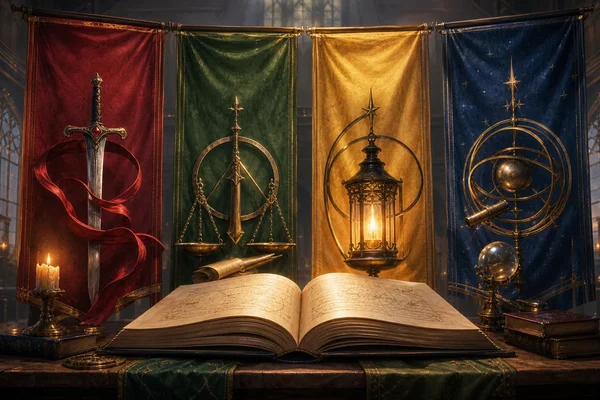
Use Genre as a Guide to Your Hogwarts Identity
So, what genre is Harry Potter? It is fantasy fiction, especially children's and young adult fantasy, with major coming-of-age, school story, mystery, adventure, and dark fantasy layers. Book 1 is lighter children's fantasy with mystery and school discovery. Book 4 is still fantasy, but darker, more political, and more dangerous. The movies are best described as fantasy adventure films.
For fans, that genre mix is part of the fun. Harry Potter is not only about spells; it is about the kind of person a magical world asks you to become. If the genre makes you curious about courage, ambition, loyalty, or wisdom, a light fan-made Sorting Quiz experience can help you reflect on which Hogwarts values feel most familiar to you.
FAQ
What genre does Harry Potter fall under?
Harry Potter falls under fantasy fiction. More specifically, it is children's and young adult fantasy with school story, mystery, adventure, coming-of-age, and dark fantasy elements.
Is Harry Potter fiction or fantasy?
It is both. Harry Potter is fiction because it is an invented story, and it is fantasy because the plot depends on magic, wizards, spells, magical creatures, and a hidden wizarding society.
Is Harry Potter considered sci-fi or fantasy?
Harry Potter is considered fantasy, not sci-fi. Its impossible events are explained through magic and magical tradition rather than technology, science, space travel, or future invention.
What genre is Harry Potter and the Sorcerer's Stone?
Harry Potter and the Sorcerer's Stone, also known as Harry Potter and the Philosopher's Stone, is children's fantasy with school story and mystery elements. It introduces Hogwarts, magic, the house system, and Harry's first major conflict.
What genre is Harry Potter and the Goblet of Fire?
Harry Potter and the Goblet of Fire is fantasy with darker young adult, adventure, tournament, mystery, and thriller elements. It marks a major tonal shift in the series.
Who is the Harry Potter author?
The Harry Potter books were written by J.K. Rowling. The core series contains seven novels published between 1997 and 2007.
Are there seven or eight Harry Potter books?
The main Harry Potter book series has seven novels. Many people search for eight because the movie adaptation has eight films, with the final book split into two movies.