Is Hogwarts Real? Filming Locations and Places You Can Visit
November 3, 2026 | By Felix Pemberton
Hogwarts is fictional, but several places used to portray it in the Harry Potter films are real and open to visitors. You can explore a courtyard from Harry's first flying lesson, recognize a filmed corridor, or see the Great Hall set and Hogwarts castle model. The useful question is which part of the screen version you want to experience.
This guide focuses on real Hogwarts filming locations and what a visit can offer. For the school's name, fictional setting, houses, and subjects, see our Harry Potter school guide.
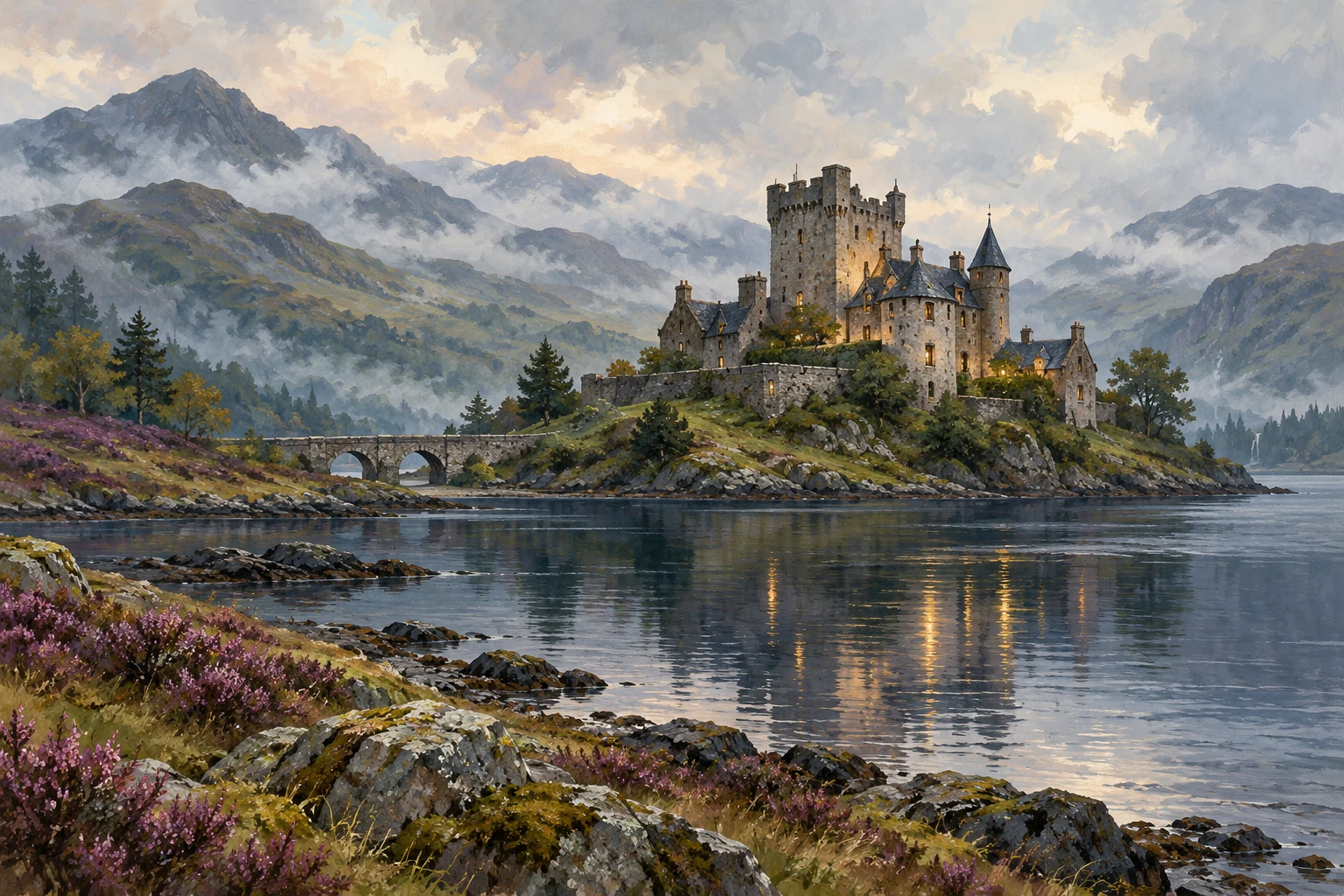
Concept illustration of an imagined castle, not a photograph of a filming location.
Where can you visit Hogwarts in real life?
There is no single real Hogwarts castle containing every room seen in the films. The production combined historic buildings, landscapes, studio sets, a castle model, and visual effects. Choose a destination by the scene or object you want to see.
| Place | Location | Film connection |
|---|---|---|
| Alnwick Castle | Northumberland, England | Castle grounds in the first two films, including the first flying lesson |
| Durham Cathedral | Durham, England | Cloisters and Chapter House used for school scenes |
| Gloucester Cathedral | Gloucester, England | Cloisters portrayed Hogwarts corridors |
| Christ Church | Oxford, England | The Hall Staircase was filmed; the hall inspired the studio Great Hall |
| Warner Bros. Studio Tour London | Leavesden, England | Original film sets and the Hogwarts castle model |
| Loch Shiel and Glenfinnan Viaduct | Scottish Highlands | Lake scenery and the Hogwarts Express journey |
These connections are not interchangeable: some places were filmed, one historic hall inspired a set, and the Studio Tour displays production pieces. None is a complete real-life Hogwarts school. The sections below explain what you can hope to see and which access details matter.
Alnwick Castle: visit the first flying lesson location
If your strongest memory is Harry learning to fly, look at Alnwick Castle in Northumberland. Its official Harry Potter filming guide identifies the Outer Bailey as the location of the first broomstick lesson in Harry Potter and the Philosopher's Stone.
The castle also supplied other school spaces in the first two films. The Inner Bailey and courtyards helped establish Hogwarts outdoors, while Lion Arch appeared as a gateway on the students' route towards Hagrid's hut and the Forbidden Forest.
For a visit, pick the scene you want to recognize before arriving. Compare the Outer Bailey with the flying lesson, then look for the separate arches and courtyard spaces. This gives you concrete details to notice beyond the general impression of a medieval castle.
Check the castle's opening calendar and visitor programme for your dates, including whether a film tour or themed activity is available. Alnwick gives you real outdoor architecture from the films; it does not contain the entire school interior.
Durham and Gloucester: find the filmed school spaces
A castle exterior and a Hogwarts corridor offer different experiences. If you want to walk among the stone arches that helped create the school's interior atmosphere, investigate the cathedral locations.
Durham Cathedral: cloisters and McGonagall's classroom
Durham Cathedral's Chapter House description explains that the room portrayed Professor McGonagall's classroom. The cathedral also identifies its involvement in the first two films through locations across its buildings, including the cloisters.
Treat the Chapter House as a specific part of your visit to check, rather than assuming general cathedral access includes it. Ask whether it is accessible on your date and whether you need a particular tour or booking. Recognizing a classroom location is much easier when you know which room you are looking for.
Gloucester Cathedral: Hogwarts corridor architecture
Gloucester Cathedral's cloisters supplied recognizable Hogwarts corridors. Its official guided-tour page describes the film connection and options for learning about the cloisters' history.
The vaulted ceilings and repeated arches are the features to notice. A guided explanation can help connect those spaces with their screen appearance while also revealing their medieval purpose.
Check whether the cloisters and any guided tour will be accessible on your date. Cathedral services and conservation work may affect visits, and the official tour information notes that arrangements can change at short notice.
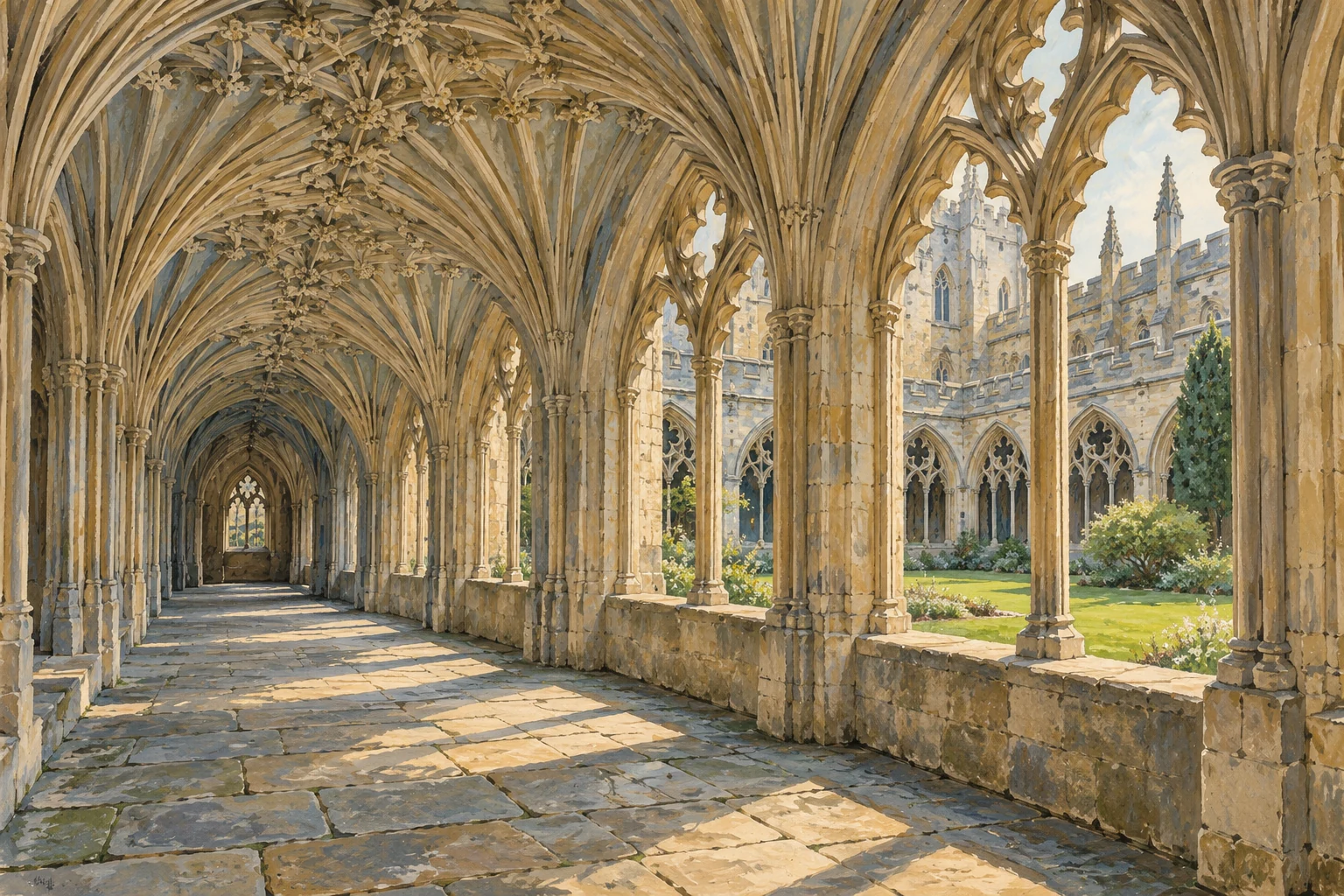
Concept illustration of cloister architecture, not a photograph of Durham or Gloucester Cathedral.
Christ Church, Oxford: the staircase and the hall are different connections
Oxford is a useful stop for fans who want to distinguish a filming location from architectural inspiration. Christ Church's official visitor guide confirms that its Hall Staircase appeared in Harry Potter productions.
The dining hall has a separate connection. Warner Bros. explains that the Hogwarts Great Hall set was designed to resemble the hall at Christ Church. The movie dining space was a constructed studio set.
That distinction helps you choose where to go:
- For the real Oxford staircase used in filming, check the Christ Church visitor route.
- For the historic hall that inspired the screen design, check access to Christ Church's hall.
- For the Hogwarts Great Hall film set, look at the Studio Tour in Leavesden.
Christ Church remains a working college and cathedral, so confirm which spaces your visitor route includes. The Hogwarts setting and house guide explains the fictional school itself; Oxford offers a different experience, with a filmed staircase and a historic hall that inspired the screen design.
Warner Bros. Studio Tour: the Great Hall and castle model
If you want to understand how filmmakers assembled Hogwarts, the Studio Tour brings the production objects into focus. It offers a different experience from visiting a historic location used for a scene.
Walk into the Great Hall set
The Great Hall was built for the first Harry Potter film and remains on display at Leavesden. Its physical construction gave the actors a shared dining and ceremony space, while visual effects supplied magical features such as the enchanted ceiling.
For a visitor, the appeal is seeing the set's scale and craftsmanship. Look at the relationship between the physical room and its screen appearance rather than expecting every magical effect to operate as it does in the story. Check the current feature programme if a particular seasonal display matters to you.
See the Hogwarts castle model
The Studio Tour's Art Department guide describes the Hogwarts castle model and explains how footage of it was combined with digital effects for exterior views.
The model is a physical miniature. It lets you study the castle's overall design, including its towers and courtyards, but it is not a full-size building with rooms to explore. This is why an impressive photograph of the model cannot identify one complete castle you can enter elsewhere.
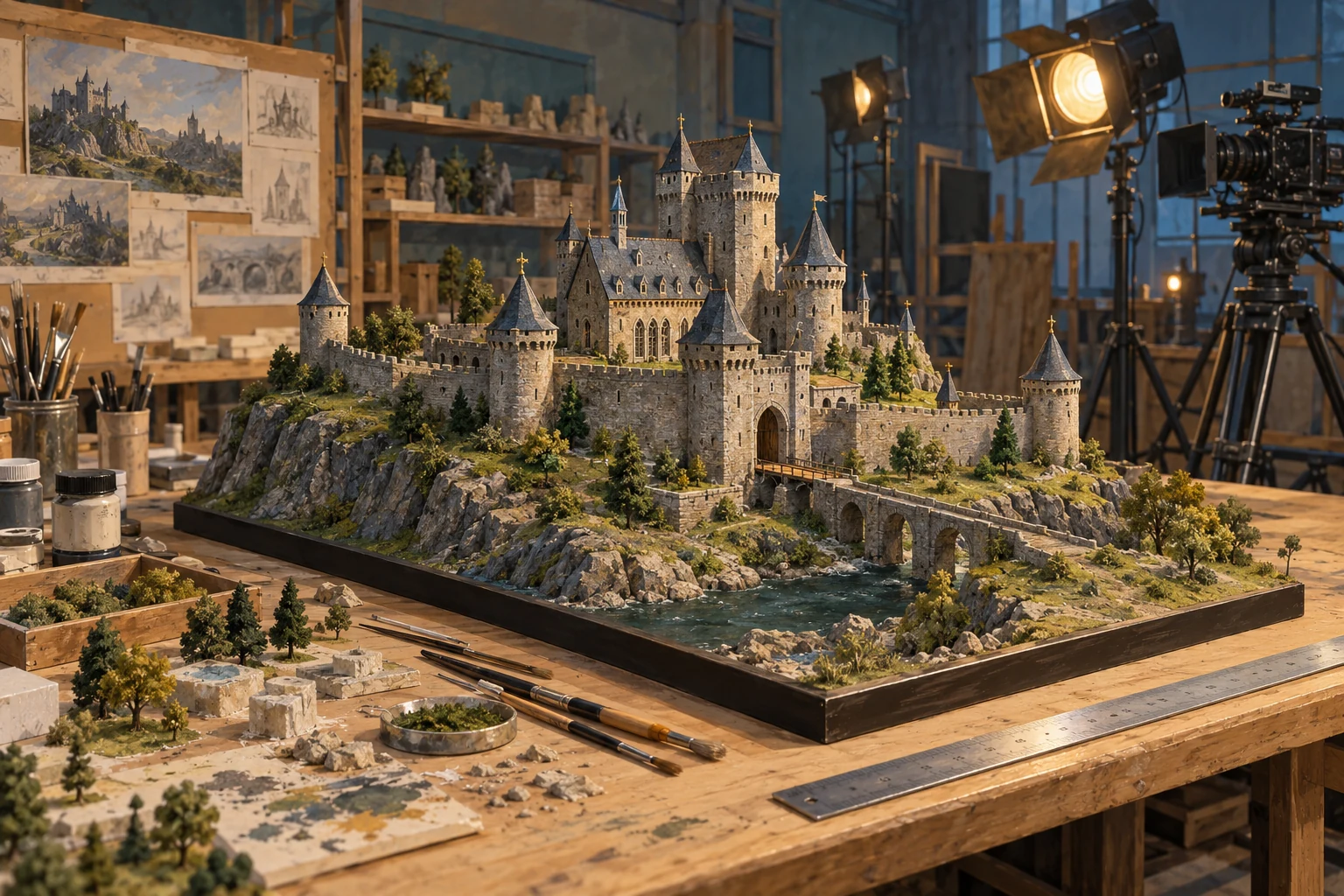
Concept illustration of model-making, not a photograph of the Hogwarts exhibit.
Plan for Leavesden, rather than central London
Despite the attraction's London name, the Studio Tour is in Leavesden, near Watford. Use its official travel directions to plan the journey. The guide identifies Watford Junction as the nearest railway station and describes the shuttle connection.
Check admission availability before building the rest of your day around the visit. Allow for the journey to the attraction as well as time inside it, and check the current transport information for your travel date.
Loch Shiel and Glenfinnan: the landscape and journey to Hogwarts
For fans drawn to the lake and train journey, the Scottish Highlands offer another part of the screen world. VisitScotland identifies Loch Shiel as a Hogwarts and Black Lake backdrop. Its film-location guide also identifies Glenfinnan Viaduct with the Hogwarts Express journey.
These are landscape experiences. At Loch Shiel, you are looking at scenery incorporated into the fictional setting. At Glenfinnan, you are seeing the real railway structure associated with the journey. Neither visit leads to a complete Hogwarts castle beside the lake.
Decide whether you want to view the viaduct, photograph a passing train, or book a rail journey. Those require different arrangements. Check current train operations if that is part of your plan, along with viewpoint access and weather conditions. A visit to the landscape does not itself include a train ticket.
How to choose which real Hogwarts place to visit
Start with your favorite scene, then match it to a place. The following choices reflect the connections described above:
| If you most want to see... | Start with... |
|---|---|
| The first flying lesson courtyard | Alnwick Castle's Outer Bailey |
| McGonagall's classroom | Durham Cathedral's Chapter House; check access |
| The stone Hogwarts corridors | Gloucester Cathedral's cloisters |
| A filmed staircase and the hall that inspired a set | Christ Church, Oxford |
| The Great Hall set and castle miniature | Warner Bros. Studio Tour, Leavesden |
| The lake scenery or Hogwarts Express railway setting | Loch Shiel or Glenfinnan Viaduct |
Make a plan by region as well as by scene
Starting near London? Compare a film-production visit at Leavesden with an architecture-focused visit to Christ Church in Oxford. They answer different questions: Leavesden shows you the built Great Hall and castle model, while Oxford lets you recognize a real filmed staircase. The Studio Tour is outside central London, so include travel to Leavesden in your plan.
Exploring northern England? Durham Cathedral and Alnwick Castle offer complementary experiences: indoor-looking school spaces and outdoor castle grounds. Research transport and the access arrangements for each before deciding whether they belong in the same trip. Gloucester is a separate destination for visitors particularly interested in the filmed cloisters.
Drawn to the train and scenery? Treat Loch Shiel and Glenfinnan as a Highlands outing rather than an add-on to an English castle visit. Decide in advance whether a viaduct viewpoint or an actual rail journey is your priority; the latter needs its own booking research.
Before paying for admission or travel, confirm the exact film-related area, whether your ticket or tour includes it, any closures or timed-entry requirements, and the journey between stops. Check each venue's official information for current prices and opening arrangements.
Bring a favorite Hogwarts scene into your visit
Hogwarts feels like one continuous place on screen, but its real-world pieces reward different kinds of attention. A courtyard can recall the first flying lesson; a cloister can reveal the texture of a corridor; a studio model can show how the castle's silhouette was created.
Choose the piece that matters to you and check the practical details for that venue. If the school's sense of belonging also appeals to you, our fan-made Hogwarts house quiz offers a playful way to explore which house values you connect with before or after your visit.
FAQ
What is the real Hogwarts castle called?
There is no single castle representing the entire school. Alnwick Castle supplied recognizable outdoor locations in the first two films, while other buildings, studio sets, a castle model, and digital effects contributed to the screen version.
Can you walk inside Hogwarts Castle?
You can enter accessible buildings used for some scenes and visit displayed sets such as the Great Hall. There is no one building where you can follow the complete movie layout through every classroom and tower.
Was the Hogwarts Great Hall filmed at Oxford?
The Great Hall was a studio set whose design drew on Christ Church's hall. Christ Church's Hall Staircase was used in filming. For the movie dining set itself, look at the Studio Tour in Leavesden.
Is the Hogwarts castle model a real building?
It is a real physical miniature made for filmmaking, rather than a full-size castle. You can view its architecture at the Studio Tour, but you cannot walk inside its rooms.