Harry Potter Magic: A Fan Guide to Spells, Powers, and Wizarding Rules
August 28, 2026 | By Felix Pemberton
Harry Potter magic feels memorable because it is not just a list of flashy effects. It has school subjects, wand technique, social rules, moral limits, strange exceptions, and personal style. For fans who are sorting out the difference between charms, curses, magical powers, wands, creatures, and game-related searches, this guide gives you a clear map without treating every fan theory as canon. If your next step is connecting that magical world to your own Hogwarts identity, the fan-made Hogwarts house quiz experience can help you reflect on the traits that feel most like you.
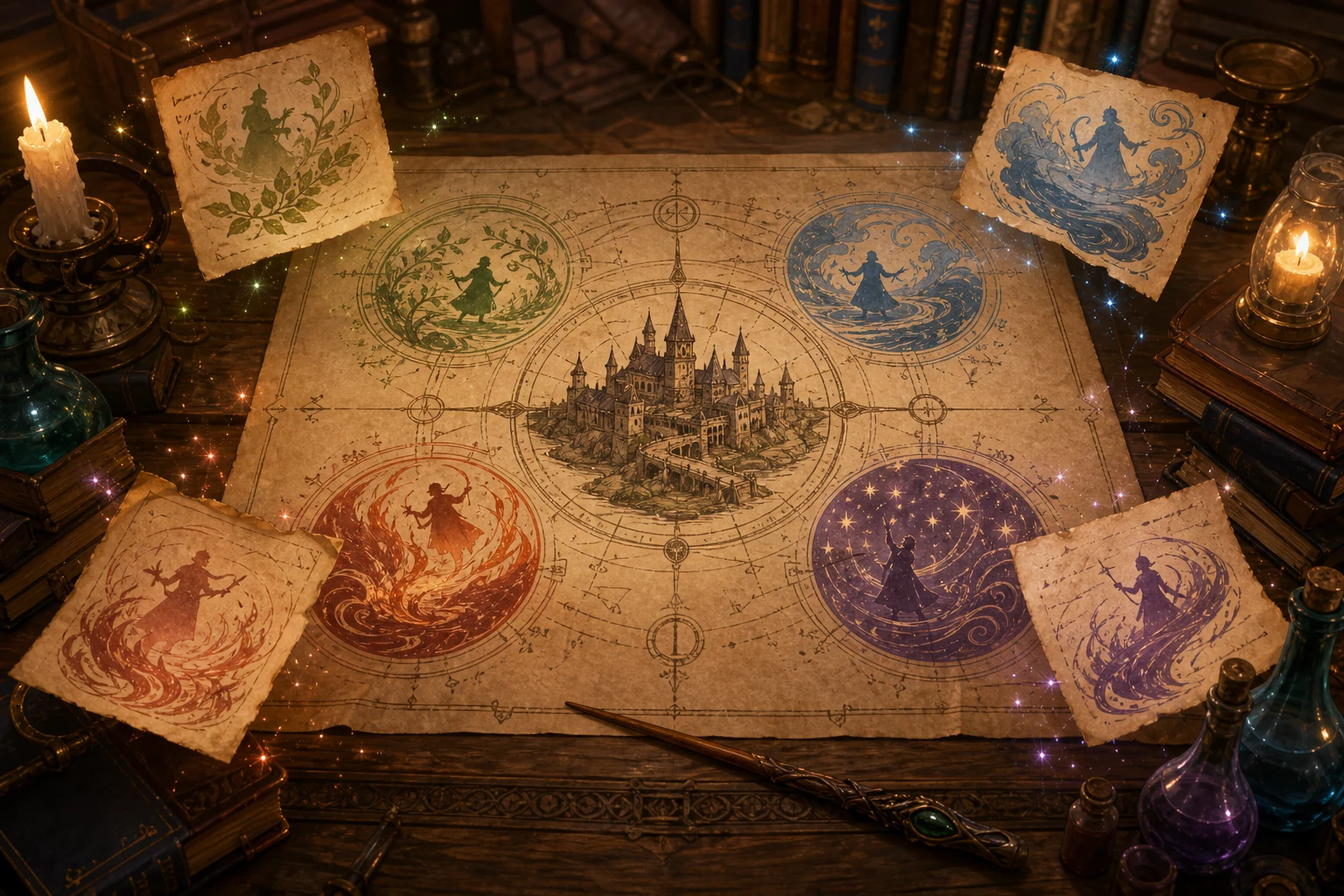
What Counts as Magic in the Harry Potter Universe?
In the broadest sense, Harry Potter magic is the hidden ability to change the world through learned spellwork, magical objects, inherited gifts, creatures, potions, and deep forces that even skilled witches and wizards do not fully explain. That is why the series can move from a simple wand-lighting charm to the mystery of sentient portraits, enchanted maps, protective love, prophecy, and dangerous dark magic without making the system feel flat.
The useful way to think about it is this: not every magical event is a spell, and not every spell is the same kind of magic. A spell is usually a deliberate act, often with an incantation, wand movement, and intent. A potion is brewed magic. A wand is a focusing tool. A magical creature may have abilities of its own. A rare magical power, such as Parseltongue or a strong connection to a Patronus, can feel more personal than classroom spellwork.
For readers, that layered system is part of the fun. You can ask practical questions, like what a spell does, and bigger questions, like why some magic has emotional or ethical consequences. It also gives fans many ways to imagine themselves at Hogwarts: as a careful spell learner, a bold duelist, a patient potion maker, a curious researcher, or someone fascinated by mysterious old objects.
The Main Types of Harry Potter Magic
There is no single official chart that neatly sorts every magical act into seven perfect boxes, but fan-friendly categories can make the world easier to understand. These categories are educational shortcuts, not strict canon labels.
First are charms, which usually add a property or behavior to a person, object, or place. Wingardium Leviosa makes an object levitate, Lumos creates wand light, and Accio summons an item. Charms often feel practical, playful, or elegant, which is why they make up so many familiar Harry Potter magic spells.
Second are transfigurations, which change form or physical nature. Turning one object into another, altering an animal, or transforming materials belongs close to this area. Transfiguration is often presented as precise and demanding because a careless change can have strange results.
Third are jinxes, hexes, and curses. These sit on a spectrum from annoying and mischievous to harmful and morally serious. A jinx might make someone trip or dance. A curse can do real damage. The Unforgivable Curses are treated separately in the stories because their use carries extreme legal and ethical weight.
Fourth are defensive and protective spells. Protego, Expecto Patronum, and other defensive magic show that power is not only about attack. In the books and films, the most meaningful protection often combines skill with courage, memory, loyalty, or sacrifice.
Fifth are potions and alchemy-like craft. Potions rely on ingredients, timing, method, and knowledge. They are magical, but they reward patience and accuracy more than dramatic wand waving.
Sixth are enchanted objects and magical artifacts. The Sorting Hat, portraits, brooms, the Marauder's Map, wands, and other objects suggest that magic can be stored, shaped, inherited, or given a kind of behavior. This is where the world feels especially mysterious.
Seventh are innate or rare magical powers. Parseltongue, Metamorphmagus abilities, seer-like prophecy, and unusual magical resistance are not taught in the same way as a classroom charm. They raise questions about ancestry, identity, emotion, and destiny.
If you enjoy thinking about which kind of magic would suit your personality, your Hogwarts house can be a playful lens. A Gryffindor might picture defensive courage, a Ravenclaw might love complex enchantments, a Hufflepuff might value healing and helpful charms, and a Slytherin might study ambitious, strategic spellcraft. For that kind of reflection, a Hogwarts house personality quiz is a natural companion to a magic guide.
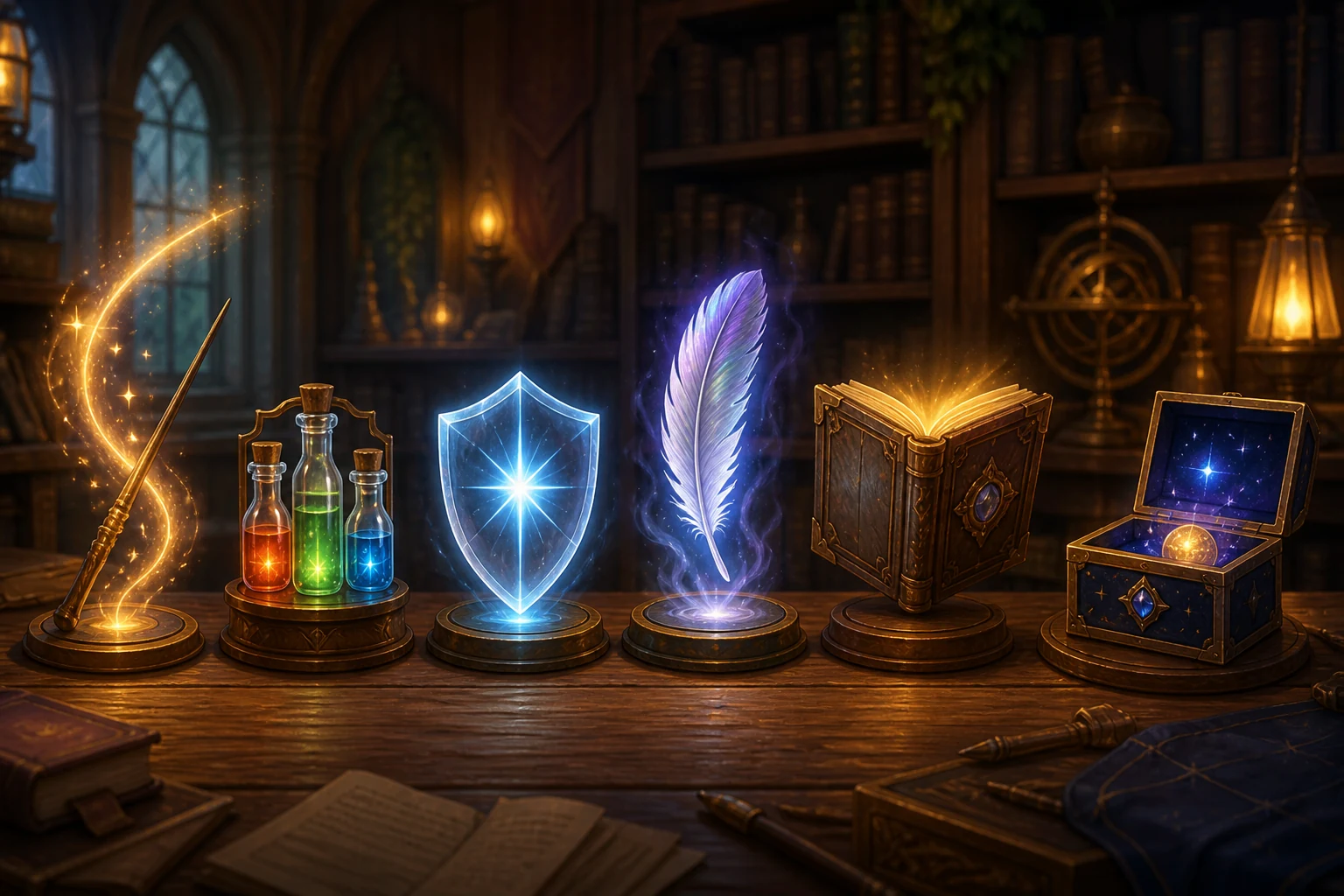
A Practical Harry Potter Magic List for New Fans
When people search for a Harry Potter magic list, they usually want a clean starting point rather than a giant encyclopedia. Here are ten famous examples and why fans remember them.
Lumos creates light at the wand tip, making it one of the easiest spells to understand. Nox turns that light off. Wingardium Leviosa levitates objects and introduces the idea that pronunciation and motion matter. Accio summons something toward the caster. Alohomora unlocks certain doors or locks. Expelliarmus disarms an opponent and becomes closely associated with Harry's defensive style. Stupefy stuns a target and appears often in duels. Protego creates a shield against some attacks. Expecto Patronum produces a protective Patronus when the caster can manage the difficult emotional focus. Riddikulus helps defeat a Boggart by turning fear toward humor.
That list mixes charms, defensive spells, and duel-oriented magic. It is not a complete spellbook, and it leaves out many niche, dark, comic, and advanced spells. Still, it gives new readers a usable foundation: light, movement, summoning, opening, disarming, stunning, shielding, protection, and fear management.
The key is to pay attention to purpose. A spell's incantation is memorable, but its role in the story matters more. Expelliarmus is not the flashiest spell, yet it says a great deal about Harry's refusal to treat every conflict as a chance to dominate. Expecto Patronum is famous because it connects magic to memory and emotional strength. Riddikulus works because it turns imagination into defense.
Magical Powers, Wands, and Objects Are Not the Same Thing
One common source of confusion is the phrase Harry Potter magical powers. Fans use it to mean many different things: the general ability to do magic, a special inherited talent, a wand's effect, a creature's ability, or an artifact's power.
A wand is not the source of all magic, but it is the best-known focusing tool. Wand wood, core, flexibility, and the bond between wand and wizard all shape the feeling of spellwork. That is why a Harry Potter magic wand search often leads fans into questions about identity, compatibility, and style rather than only props or merchandise.
Magical objects work differently. A broom can fly. A portrait can preserve a personality-like echo. The Sorting Hat can speak, consider students, and make choices within the story's school tradition. These objects suggest that magic may be layered into materials over time, shaped by makers, or influenced by memory and intention.
Magical creatures add another layer. A phoenix, Dementor, house-elf, dragon, or Hippogriff does not simply cast human spells. Each belongs to the world with its own abilities, limits, and rules. That makes the universe feel wider than classroom magic.
Finally, some powers are personal. Parseltongue, prophecy, and Metamorphmagus ability are not normal homework assignments. They are rare traits that affect how characters are perceived. In story terms, they often create tension between who someone is, what others assume about them, and what choices they make.
Harry Potter: Magic Awakened and Other Search Confusions
Search data around harry potter magic includes several terms that are not about the books' magic system at all. Harry Potter: Magic Awakened is a collectible card role-playing game, so searches for download, Android, PC, or global are usually transactional game queries. Availability has changed by region over time, so a general article should avoid promising that a specific download route works for every reader.
Harry Potter Magic: The Gathering is another mixed-intent phrase. Some searchers may be comparing wizard-themed card play with the trading card game Magic: The Gathering. Others may be typing a blended phrase by accident. Either way, it is separate from the Harry Potter spell system.
The cleanest approach is to separate the intent:
- If you want lore, focus on spells, rules, wands, creatures, and magical objects.
- If you want a game, check the current official store or publisher information for your region.
- If you want personality exploration, connect the magic styles you enjoy with Hogwarts house values.
That last path is especially useful for fans who are not looking for a download at all. If defensive magic, clever enchantments, loyal support spells, or ambitious strategy catches your attention, it may hint at the kind of house identity you enjoy exploring.
Rules That Keep Wizarding Magic Interesting
Magic would feel less compelling if it solved every problem instantly. The Harry Potter universe keeps tension alive through limits.
One major limit is secrecy. Wizarding society has rules about keeping magic hidden from non-magical people. This creates comedy, conflict, and bureaucracy, but it also explains why magic does not simply rewrite the public world.
Another limit is skill. Many spells require practice, pronunciation, wand motion, focus, and emotional readiness. A student can know the words and still fail. That makes magic feel learnable without making it effortless.
There are also moral limits. Some magic is legally restricted or treated as deeply wrong. The stories repeatedly suggest that ability and permission are not the same thing. A character may be able to use a spell, but the choice to use it still reveals values.
Death is another boundary. The series circles around resurrection, ghosts, Horcruxes, and the Deathly Hallows, but it does not present a simple, harmless way to undo death. That boundary gives love, grief, bravery, and sacrifice real weight.
Finally, magic has mysteries. Sentient objects, portraits, ancient protections, and rare powers remind readers that the world is larger than the lessons students receive. A good magic system leaves some doors closed.
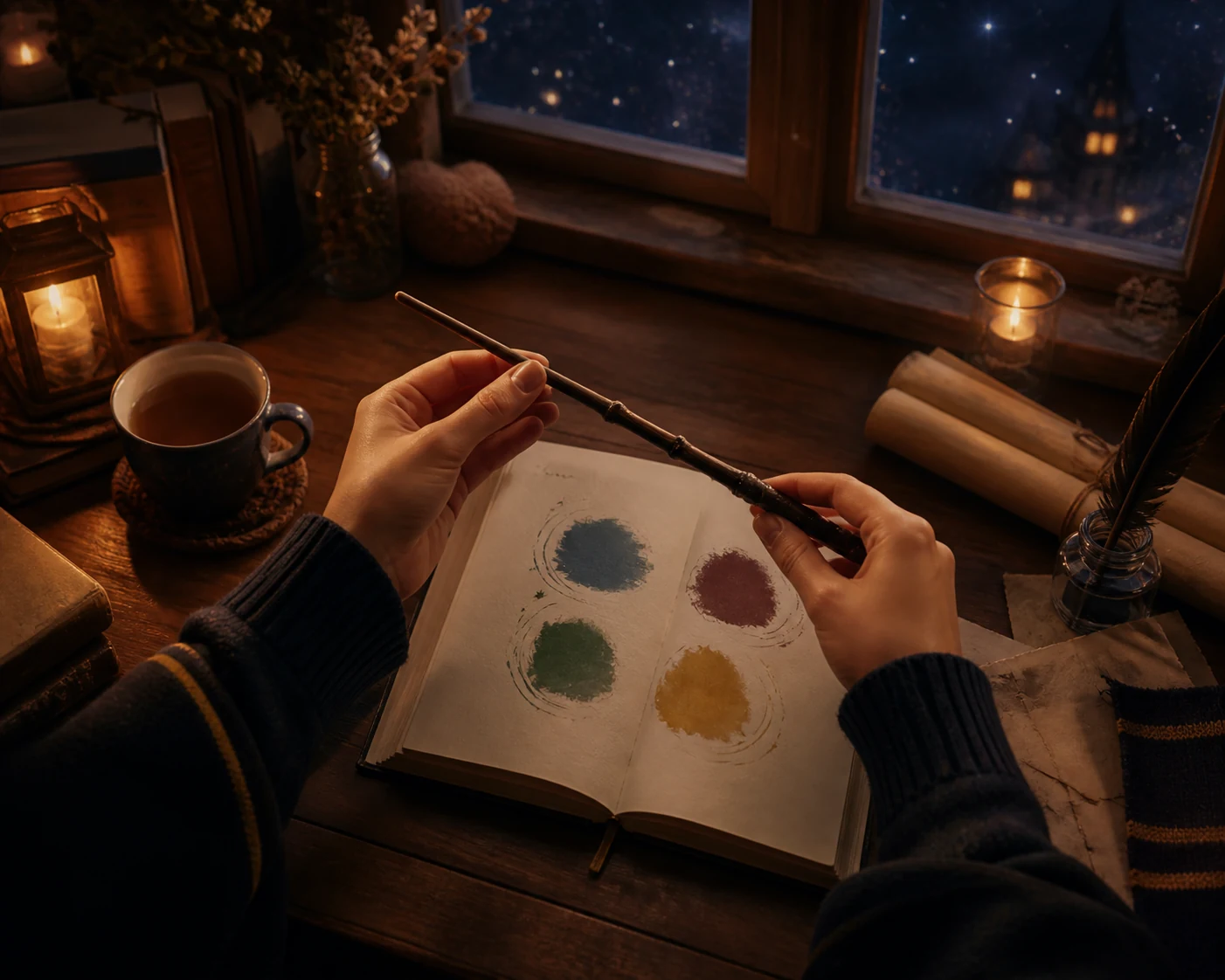
How to Explore Harry Potter Magic Through Your Hogwarts House
Harry Potter magic becomes more personal when you ask what kind of magic you would study, use, or admire. This is not an official sorting method, and it should stay fun rather than absolute, but it can make the fandom richer.
Try a simple reflection exercise. Choose three forms of magic from this guide: one practical spell, one protective or ethical form of magic, and one mystery you would want to research. Then ask what those choices say about your values. Do you like courage under pressure, careful knowledge, loyal usefulness, or strategic ambition?
You can also compare magic styles with house traits. Gryffindor-coded magic often feels brave, protective, and direct. Ravenclaw-coded magic may feel experimental, elegant, and knowledge-heavy. Hufflepuff-coded magic can lean toward care, patience, and everyday helpfulness. Slytherin-coded magic may emphasize control, resourcefulness, and long-term strategy.
None of these connections has to box you in. The best fan readings leave room for overlap. A Ravenclaw can love defensive spells. A Slytherin can value healing. A Hufflepuff can master dueling. A Gryffindor can obsess over ancient magical theory. If you want a low-pressure way to compare your own traits with the four houses, you can explore your magical identity through a house quiz and then return to the magic list with fresh eyes.
FAQ
What is Harry Potter's magic spell?
There is not one single Harry Potter magic spell, but Expelliarmus is the spell most strongly associated with Harry himself. It is the Disarming Charm, used to knock an opponent's wand or weapon away. Fans also commonly recognize Lumos, Wingardium Leviosa, Accio, Stupefy, Protego, and Expecto Patronum.
What are the 7 types of spells in Harry Potter?
Fans often group magic into practical categories such as charms, transfiguration, jinxes, hexes, curses, defensive spells, healing-related magic, and enchantments. The exact number depends on how you define each group. For a simple seven-part learning map, use charms, transfiguration, jinxes, hexes, curses, defensive magic, and object enchantments.
What are 10 spells from Harry Potter?
Ten well-known spells are Lumos, Nox, Wingardium Leviosa, Accio, Alohomora, Expelliarmus, Stupefy, Protego, Expecto Patronum, and Riddikulus. They cover light, levitation, summoning, unlocking, disarming, stunning, shielding, advanced protection, and fear-facing magic.
Are there 77 spells in Harry Potter?
You can find fan spell lists with dozens of entries, and some may include 77 or more depending on whether they count book-only spells, film spells, game spells, jinxes, charms, curses, and uncertain incantations. The exact total changes by source and counting method.
What is the difference between charms and curses?
Charms usually add a useful, playful, or practical effect to a target, such as light, levitation, or summoning. Curses are harmful magic. Some curses are treated as especially serious because they violate wizarding law and reveal dangerous intent.
Is Harry Potter magic learned or inherited?
Both ideas matter. A person is usually born with magical ability, but most spellwork must be learned through practice. The series also includes rare inherited or unusual powers, such as Parseltongue or Metamorphmagus ability, that are not taught like ordinary classroom spells.
Is Harry Potter: Magic Awakened the same as Harry Potter magic?
No. Harry Potter: Magic Awakened is a game title, while Harry Potter magic refers to the broader spell system, magical powers, objects, creatures, and rules in the Wizarding World stories. Searchers often use similar wording for both, so it helps to separate lore questions from game download questions.